24*7 365 days
24*7 365 days
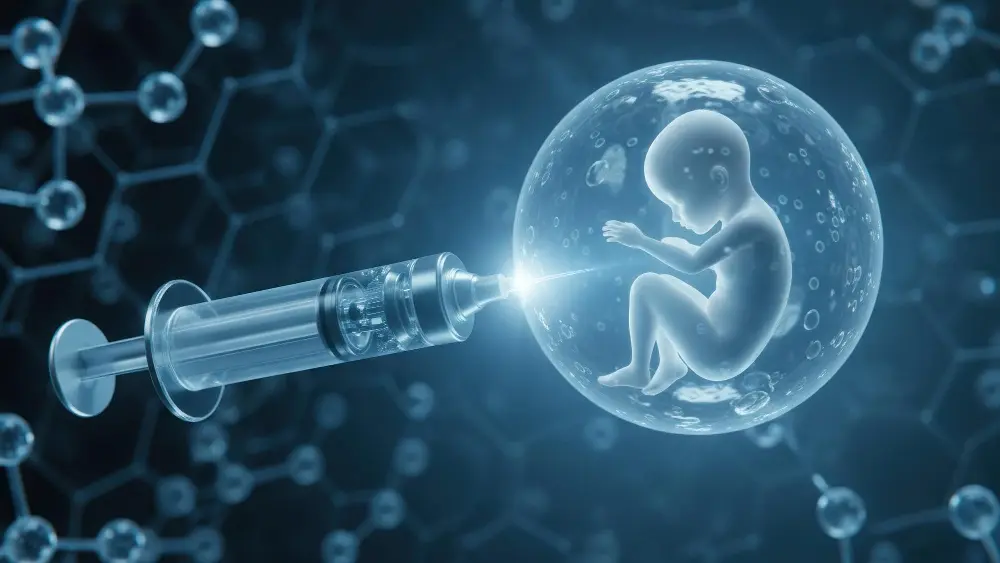
The Test Tube Baby and IVF department of Venus Hospital stands at the forefront of our reproductive medicine. Our IVF center in Kathmandu provides detailed care and support for our patients facing challenges regarding conception or fertility. With a deep understanding of the emotional and physical complexities of infertility, we offer you a wide range of advanced reproductive technologies and fertility treatments customised to meet your unique needs.
Led by a team of highly skilled and compassionate fertility specialists, our IVF centre is committed to guiding you through every step of your fertility journey with sensitivity, empathy, and expertise. As one of the best IVF center in Nepal, we strive to empower individuals and couples to achieve their dreams of parenthood from initial consultation and diagnosis to personalised treatment planning and ongoing support. The key services provided by the IVF department at Venus Hospital include the following:
Comprehensive fertility evaluations include several key components to check both partners’ reproductive health and check the most suitable solutions for attaining pregnancy. This typically comprises a detailed medical history to know any relevant health issues, physical examinations, and blood tests to analyse hormone levels important for fertility. Tests such as semen tests are counted to investigate the sperm count, motility, and morphology of male partners. Likewise, the female partners may need to go through ovulation evaluations through blood tests and ultrasound.
Additionally, tests such as genetic testing may also be recommended based on individual circumstances during the comprehensive fertility evaluations. Furthermore, counselling and education are an integral aspect of the process. The couples are guided through their fertility options and the IVF procedure. The goal here is to identify potential barriers to conceptions and develop personalised treatment plans.
Assisted Reproductive Technologies, or ART for short, is a term used to represent various medical procedures designed to achieve pregnancy. These technologies involve handling both eggs and sperm outside the body, usually in a laboratory setting.
Assisted Reproductive Technologies provide opportunities for individuals and couples to overcome infertility and have children. Therefore, every Assisted Reproductive Treatment is customised to the individual needs.
Embryo transfer and implantation are important steps in procedures such as in vitro fertilisation. This process involves preparing the uterus with hormonal treatments. Once the uterus is ready, the embryo transfer and implantation process involves selecting high-quality embryos and using ultrasound-guided techniques for precise placement.
After this process is completed, the experts might provide the patients with hormonal support to aid in implantation. This aspect of embryo transfer and implantation occurs when the transferred embryo attaches to the uterine lining and forms a potential for pregnancy. Some key aspects of this process include:
In this service, a prospective egg or sperm donor goes through a rigorous screening. The process involves aspects such as:
Once selected, the donors undergo stimulation to produce the eggs and sperm. Then, the retrieved eggs/ sperm are stored for further use. Once a recipient requests the use of donated eggs or sperm, they are retrieved and used to fertilise the eggs for potential pregnancy. Counselling services are often provided to donors and recipients, offering support throughout the emotional and ethical complexities of third-party reproduction. When used together, they enable patients who are unable to fulfil their dream of parenthood while overcoming biological challenges.
Counselling and Support Services are essential components of our IVF center in Kathmandu. Through our counselling and support services, we provide emotional, psychological and informational support to our patients, aiming to use Assisted Reproductive Technologies such as IVF and IUI.
Our counselling phase begins in an early process where we offer an opportunity to discuss expectations, potential outcomes, and emotional challenges associated with fertility treatment. Our expert counsellors help patients explore their feelings about infertility, manage stress and anxiety related to treatment protocols, and make informed decisions about their fertility journey.
Furthermore, the support at our IVF center in Nepal extends beyond emotional support. It also includes practical guidance on medical aspects of treatment, such as understanding the facility, medications, the procedure itself, and potential complications.
These services are designed to empower individuals and couples by providing them with the tools and resources required to navigate the challenges of infertility treatment while maintaining emotional well-being and developing resilience.
Fertility Screening
Fertility screening is a series of tests and evaluations conducted on your reproductive health and potential fertility. IVF specialists at our IVF center in Nepal recommend these tests for individuals or couples who are planning to conceive or who have concerns regarding their fertility. This screening process can include various components depending on your specific circumstances and medical history. That said, some common tests and evaluations that we may include in your fertility screenings are as follows:
Medical history and physical examination
Hormone testing
Ovulation assessment
Semen analysis imaging studies
Genetic screening
Infectious disease screening
The fertility screening services offered by our IVF centre in Nepal provide you with valuable information about your reproductive health to identify any potential barriers to conception. Based on the results of this screening, our experts may suggest further evaluation or treatment.
Fertility Induction
Fertility induction is also known as ovulation induction, and it is a medical treatment aimed at stimulating ovulation in individuals who are experiencing difficulty conceiving due to irregular or absent ovulation. As one of the best hospitals in Nepal for IVF treatment, our experts at Test Tube Baby and IVF Centre commonly use this technique in the management of infertility conditions such as polycystic ovary syndrome (PCOS), irregular menstrual cycle, or unexplained infertility.
This process involves the use of medications to regulate and stimulate the ovaries to produce and release eggs. The specific medications and treatment protocols for fertility induction vary depending on the specifics of your circumstances.
Tubal Patency Test (SSG)
The Tubal Patency Test, also known as Salpingogram (SSG) is a diagnostic procedure that our experts at the IVF center use to check the openness of the fallopian tubes. The test is typically a part of fertility evaluation for individuals or couples experiencing difficulties with conception.
During this test, our IVF department experts inject a contrast agent through the cervix into the fallopian tubes. The low of the contrast agent is then visualised using an x-ray imaging or ultrasound to assess whether the tubes are open and functioning properly or not.
This test is used to examine the condition of fallopian tubes and identify any form of blockages, adhesions, or abnormalities that may interfere with fertility. By assessing tubal patency, the Tubal Patency Test helps fertility specialists determine the most appropriate course of treatment for individuals or couples struggling with infertility. Depending on the results of the test, further evaluation or treatment may be recommended, such as in vitro fertilisation (IVF) or surgery to repair blocked fallopian tubes.
Antenatal Care
Antenatal care, also known as prenatal care, is the medical care and support provided to pregnant individuals by our experts at Test Tube Baby and the IVF centre throughout pregnancy. The primary goal of antenatal care is to ensure the health and well-being of both you and the developing foetus. Antenatal care typically begins soon after a pregnancy is confirmed and continues until childbirth. It involves a series of regular check-ups, screenings, and interventions designed to monitor the progress of the pregnancy, detect any potential complications or risks, and provide guidance and support to the expectant parent(s).
Overall, antenatal care is crucial in promoting a healthy pregnancy and ensuring the best possible outcomes for both you and your baby.
IVF, IUI, ICSI
IVF, IUI, and ICSI are all assisted reproductive technologies (ART) used to help individuals and couples achieve pregnancy when natural conception is not successful. Following is a brief overview of each of these services:
In Vitro Fertilisation (IVF)
This is a fertility treatment where eggs are retrieved from the ovaries and then fertilised in a petri dish in a laboratory. The fertilised eggs are incubated for a few days before being transferred back into the uterus for natural development. This is one of the best treatments for blocked fallopian tubes, advanced maternal age, male factor infertility, and unexplained infertility.
Intrauterine Insemination (IUI)
IUI treatment in nepalIUI is another form of assisted reproduction technology where our experts directly place the sperm into the uterus around the time of ovulation. This procedure directly bypasses the cervix and places the sperm closer to the fallopian tubes, increasing the chances of fertilisation. IUI is a highly recommended procedure for mind factor infertility, cervical factor infertility, or unexplained infertility.
Intracytoplasmic Sperm Injection (ICSI)
Intracytoplasmic Sperm Injection (ICSI) is a specialised form of IVF where a single sperm is injected directly into an egg to facilitate fertilisation. Our specialists at the test tube baby and IVF department use this technique in case of severe male factor infertility. We also use this technique when previous IVF cycles have resulted in low fertilisation rates or failed fertilisation. This form of procedure is typically performed under the guidance of an expert reproductive endocrinologist or fertility specialist and is customised to your individual needs. While these treatments can significantly increase the chances of pregnancy for many couples, they may not be suitable for everyone, and success rates can vary depending on various factors. It’s important for individuals and couples to discuss their options with a healthcare provider and make informed decisions about their fertility treatment journey.
Fertility Preservation
Fertility preservation refers to a series of medical techniques and procedures that are aimed at preserving fertility for those who may be at risk of losing their reproductive potential due to medical treatments, age-related decline in fertility, or other factors. This treatment at Venus Hospital, the best IVF center in Kathmandu allows you to retain the option of having biological children in the future, even if you are not ready to start a family at the present time. Some of the common fertility preservation that our test tube baby and IVF centre experts use include the following:
Egg Freezing
Sperm Freezing
Embryo Freezing
These three techniques offer you the opportunity to protect your reproductive options and make informed decisions about family planning. It’s important for you to discuss your options with a fertility specialist or reproductive endocrinologist to determine the most appropriate fertility preservation strategy based on your circumstances and goals.
Our Best IVF Doctors For The IVF Treatment
1) Dr. Anupama Suwal (IVF Specialist)
dr.-anupama-suwal best ivf doctor in Nepal
Speciality – Gynecology
NMC Number – 6102
Qualification – MBBS, MD Obstetrics and Gynecology Fellowship in IVF and Gynecology Laparoscopy and hysteroscopy
Experience: More than 10 years as an IVF Speciality
Passed Out University: MD (Obstetrics and Gynecology) Kathmandu University, Dhulikhel, 2011 | MBBS, Kathmandu University, Dhulikhel, 2005
OPD Time: 12 PM to 4 PM (SUN – FRI)
Frequently Asked Questions (FAQs)
What is IVF treatment?
IVF, or In vitro fertilization, is an infertility treatment. In this form of infertility treatment, the eggs from the women are extracted before being fertilized with sperm in a laboratory. The resulting embryos are then monitored from development for some time. Once the eggs reach a certain maturity, they are then transferred back into the woman’s uterus. This process is widely used to assist individuals or couples with fertility challenges to get pregnant.
How does IVF treatment work?
The overall process of IVF involves several steps, and the specific steps involved depend on your circumstances. However, the general process is as follows:
Ovarian Stimulation: Fertility medications are used to stimulate the ovaries to produce multiple eggs.
Egg Retrieval: Eggs are collected from the ovaries using a minor surgical procedure.
Fertilization: The eggs are fertilized with sperm in a lab to create embryos.
Embryo Culture: The embryos are monitored for a few days to assess their development.
Embryo Transfer: One or more healthy embryos are transferred into the uterus.
Pregnancy Test: After about two weeks, a pregnancy test is conducted to determine if the procedure was successful.
Who chooses IVF?
Many types of people choose IVF. Some of the key types of individuals and couples who choose IVF are as follows:
Those facing infertility issues, such as blocked fallopian tubes, ovulation disorders, or male factor infertility, often turn to IVF when other treatments have failed.
Women experiencing age-related fertility decline may opt for IVF to improve their chances of conception.
Those struggling with issues like blocked fallopian tubes, ovulation disorders, or male factor infertility may opt for IVF when other treatments are unsuccessful.
People who want to avoid passing on genetic disorders may use IVF with preimplantation genetic testing to select healthy embryos.
When the cause of infertility is unknown, IVF can be a recommended option to increase the likelihood of pregnancy.
Those who have tried other fertility treatments without success may turn to IVF as a more advanced option.
Individuals undergoing cancer treatment may choose IVF to preserve their fertility by freezing eggs or embryos before starting chemotherapy or radiation.
How much does IVF cost in Nepal?
The cost of IVF in Nepal depends on many factors. Some of these factors include cost, location of the hospital, reputation of the clinic, fertility treatment approach, diagnostic tests, and medication expenses. However, at Venus Hospital, you can get the best IVF treatment between 2,00,000, excluding medicine and 2,50,000, including medicines, pickup, and transfer.
Is IVF 100% successful?
Although IVF does have a relatively high success rate when compared to other forms of infertility treatment options, it is not always successful. The success rate of IVF depends on many factors such as the age of the couple, the cause of infertility, the quality of the embryos, and the expertise of the medical team.
What is the success rate of IVF in Nepal?
The specific success rate of IVF in Nepal depends on many factors. However, the average success rate of IVF in Nepal as per the age bracket is as follows:
Success rate of IVF in Nepal Are IVF babies normal?
Yes, IVF babies are normal. They develop and grow just like babies conceived naturally. Rather, because of additional treatment options such as Preimplantation Genetic Testing (PGT), IVF babies can often be healthier than regular babies without any forms of genetic disorders and have rather strong genes.
Can we choose gender with IVF?
No, you cannot choose gender with IVF, at least not in Nepal and many other nations. While some nations allow for the sex of babies for medical purposes, Nepal is not one of them. Therefore, choosing gender with IVF is illegal in Nepal.
Is it painful to do IVF?
Although IVF can sometimes be uncomfortable, it is not generally considered painful. The most uncomfortable aspects of IVF include hormone injections, which might cause mild side effects, and egg retrieval, which can cause cramping or soreness. Besides this, there are no forms of pain in general.
Is IVF treatment safe?
Yes, IVF treatment is generally safe. Although it does carry some risks, such as Ovarian Hyperstimulation Syndrome (OHSS) and multiple pregnancies, these risks can easily be managed with some preparation and the aid of medical professionals.
Who is the IVF specialist I should consult?
There are many options for you if you want consultations regarding IVF treatment at Venus IVF Center in Kathmandu. The experts you can consult with include:
Dr. Anupama Suwal (IVF Specialist)
How do I make an appointment for the IVF at Venus Hospital?
If you make an appointment for IVF at Venus Hospital, you can contact us at the following details:
Phone:01 – 4575120 | 01 – 4590333 | 01 – 4590255
Email: info@venushospital.com.np
Contact@venushospital.com.np
Location: Mid Baneshwor, Kathmandu, Nepal