24*7 365 days
24*7 365 days
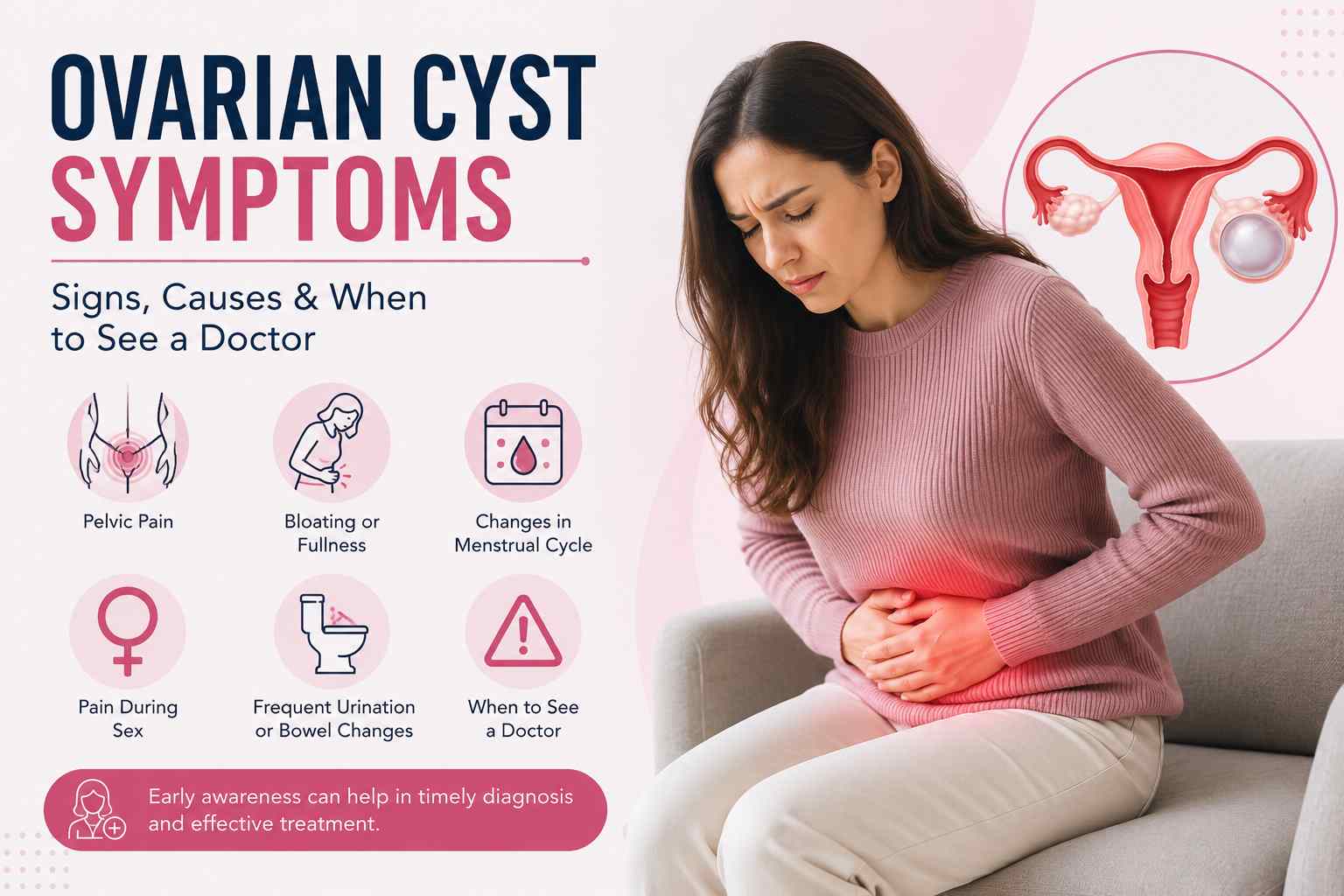
Ovarian cysts are a common health issue which may or may not have any noticeable symptoms. Many ovarian cysts are not harmful, and they go away on their own without treatment. In rare instances a cyst can grow large, get uncomfortable, rupture or block the blood supply to the ovary.
Knowing the signs and symptoms of ovarian cyst can help you understand when you may need medical advice. Some of the symptoms include pelvic pain, bloating, irregular periods or discomfort with sexual activity. If these symptoms continue, become more severe, or start affecting your daily life, it is important to seek medical advice for a proper diagnosis and appropriate treatment.
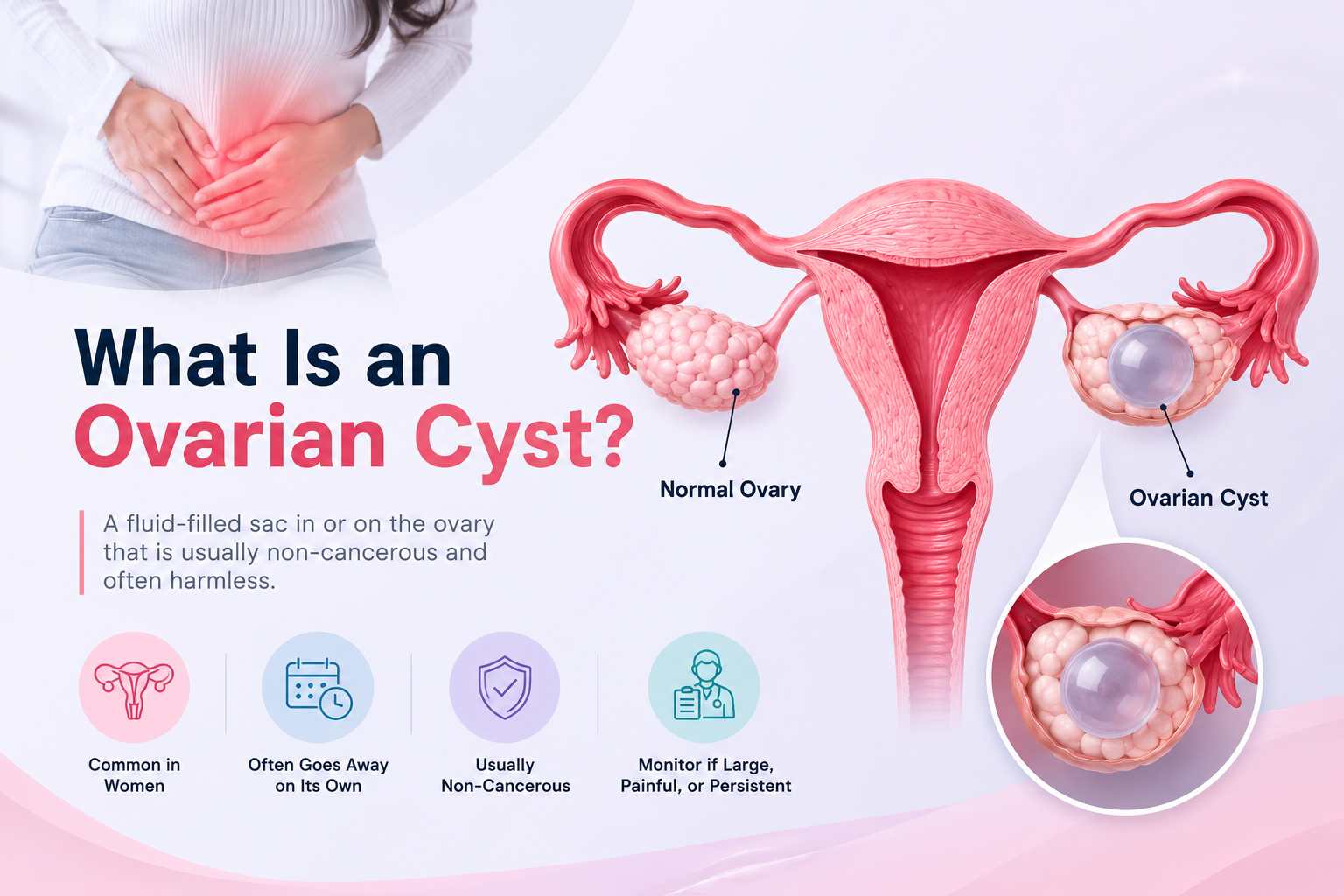
An ovarian cyst is a fluid or other mass enclosed within a wall in or on the ovary. The ovaries are part of the female reproductive system. On either side of the uterus and produce eggs and hormones.
Ovarian cysts may happen during childbearing years, as well as afterwards menopause. The vast majority of cysts are not cancer and aren't dangerous. Many go away on their own without any treatment in a few weeks or months. If the cyst grows very large, bursts, bleeds, and/or twists the ovary, they may produce symptoms. That's why it's important to look out for new or unusual pelvic symptoms.
Many people with ovarian cysts do not experience any symptoms. Sometimes a cyst is detected on routine examination of a woman's pelvis, or as part of another medical investigation, such as one for abdominal pain. Symptoms are more likely to occur if a cyst gets ruptured, grows too big, puts pressure on other organs or if it affects the ovary.
Signs and symptoms will depend on the size, type and location of the cyst. They may last for a short period of time, and may show up again and again, or may become noticeable slowly, over a long period of time.
Pelvic pain is one of the most common symptoms of an ovarian cyst. The pain can be dull, aching, heavy or sharp. Can be experienced in the lower abdomen on one side or in the pelvic region. It can last for a long time or be intermittent. Others might experience pain when at rest, while exercising or when moving. A ruptured cyst or an ovary that twists on itself could cause sudden and severe pelvic pain. This could need immediate medical attention.
A large ovarian cyst can be accompanied by bloating, bulging or discomfort in the lower abdomen. Some may experience a full or heavy feeling in their tummy. Sometimes you can be full with just a small volume of food. There are many causes of bloating, but if it doesn't improve or if it becomes uncomfortable or occurs when it doesn't with other symptoms, you should talk to a health professional.
A small number of ovarian cysts can cause discomfort or pain during sexual activity and sex. The pain can be significant in particular positions and deep in the pelvis. Other health issues, including endometriosis, pelvic infections or other gynecologic issues, can also lead to pain during sex. If the pain occurs regularly, is deep or disrupts your life, it may be beneficial to seek medical help.
Certain ovarian cysts can have a negative impact on the menstrual cycle. Some changes in your menstruation may occur that you notice, such as heavier or lighter periods, more or less pain during periods, or periods that are irregular in length or occur at an irregular time.
But fluctuation in the period does not directly imply that you're going to have an ovarian cyst. Other health issues can cause the menstrual cycle to change, such as through hormones. A sudden change in periods or periods that are irregular for a couple months should be regarded as a good sign to seek medical advice.
The large ovarian cyst can compress the neighboring organs, including bladder and bowel. This can lead to frequent urination, pressure on your bladder or constipation. People may also have mild bowel pressure and slight stomach discomfort or pain during bowel movements. These symptoms can also be caused by digestive or urinary problems, so a medical check-up can help identify the cause.
Depending upon size and possibly the pressure on nearby organs, some ovarian cysts may also have other symptoms. These signs and symptoms can be different for each individual.
The following are other potential ovarian cysts signs and symptoms:
In general, ovarian cysts are not the cause of infertility. Some illnesses associated with specific kinds of cysts may have an impact on fertility, however. If you have a medical condition, such as irregular ovulation, or trouble conceiving, it is important to communicate with a medical practitioner to determine if it is related to your pelvic condition.
If your period pain continues, you often feel bloated, your menstrual cycle changes, or you have symptoms that do not improve, it's important to consult your doctor. You should also talk to a health care provider if the symptoms occur more often, worsen or begin to interfere with your daily life.
These symptoms do not always mean that you have an ovarian cyst. Other gynecological, gastrointestinal or urinary diseases can also cause them. Your doctor will ask you about your symptoms, look at your pelvis, and may order an ultrasound or other tests if necessary to help make a diagnosis.
If sudden and severe pain occurs in the pelvis or abdomen (abdomen) and you experience any of the following, you need urgent medical care, such as nausea, vomiting, dizziness, weakness or fainting. The symptoms could be associated with ruptured cyst, ovarian torsion, or something else necessitating urgent medical attention.
Most ovarian cysts are not an emergency, and can resolve on their own. In some instances, a cyst can burst, break into the ovary and result in bleeding or cause the ovary to twist. The symptoms of these problems may occur suddenly and severely and could need urgent medical intervention.
If you have sudden or severe pain in the pelvis or abdomen, particularly if it is accompanied by nausea, vomiting, fainting, dizziness, severe weakness, rapid breathing, fast heartbeat, and large amounts of vaginal bleeding, seek emergency help. Sudden, severe pain or nausea and vomiting, may indicate a twisted ovary (ovarian torsion), which can affect the blood supply to the ovary. The quickness of access to medical care is crucial to identify the cause timely and provide appropriate treatment.
There can be a variety of reasons that lead to ovarian cysts. These can form naturally as part of normal periods, or be associated with diseases like endometriosis or abnormalities of the growth of cells. It may be determined by the type of cyst and all of a person's health and age.
For most of the time, ovarian cysts are not harmful and will go away on their own. However, certain cysts can grow, become symptomatic and require medical intervention. A physical examination and imaging procedures, like ultrasound, may help a doctor determine what kind and cause of a cyst it is.
The most frequent form of ovarian cysts is functional cysts. They are produced as a regular part of the menstrual cycle and typically happen prior to menopause.
An egg develops in a little fluid-filled sac called a follicle during ovulation. If the organism ovulates or if it does not go down after being ovulated in the follicle, a functional cyst can be formed. The cysts tend to resolve spontaneously in weeks or months and are typically not a cause for concern.
Ovarian cysts also can occur because of other causes that are not the normal menstrual cycle. Some of these cysts can be related to a condition of health or others can develop from cells on or near the ovary.
Other ovarian cysts are:
Ovarian cysts are typically not cancerous. But a few may be cancerous. Generally, any new ovarian cyst (after menopause) is a cause for concern and must be carefully monitored by a health care professional.
If a doctor is suspecting presence of an ovarian cyst, he or she will ask questions about the symptoms, your menstrual cycle, and medical history. They may also examine the pelvis of their woman patient to determine if there is any pain, swelling or alterations in this area of the pelvis.
An ultrasound exam of the ovary is one of the most commonly performed exams. Gives details of size, exact location and appearance of the cyst which helps the doctor interpret. The ultrasound might give information about:
The size of the cyst:
Blood tests or further imaging might be considered in certain cases. The tests required could vary depending on how old you are, symptoms, ultrasound scans and if you have stopped having periods. These tests can enable the doctor to determine the nature of the cyst and determine whether or not the cyst should be watched or treated.
No. Most ovarian cysts don't require treatment, and they typically go away on their own. Treatment depends on the size and type of the cyst, symptoms, age and health status.
Your doctor may suggest following up the cyst with an ultrasound. This is sometimes referred to as "watchful waiting. It enables the physician to see if the cyst has shrunk or gone away, or if it remained the same or increased over time.
Treatment may be considered if the cyst:
Sometimes the removal of the cyst may be required through surgery. Treatment will depend on the type of cyst and individual health problems. Your doctor will discuss the options and suggest the right one for you.
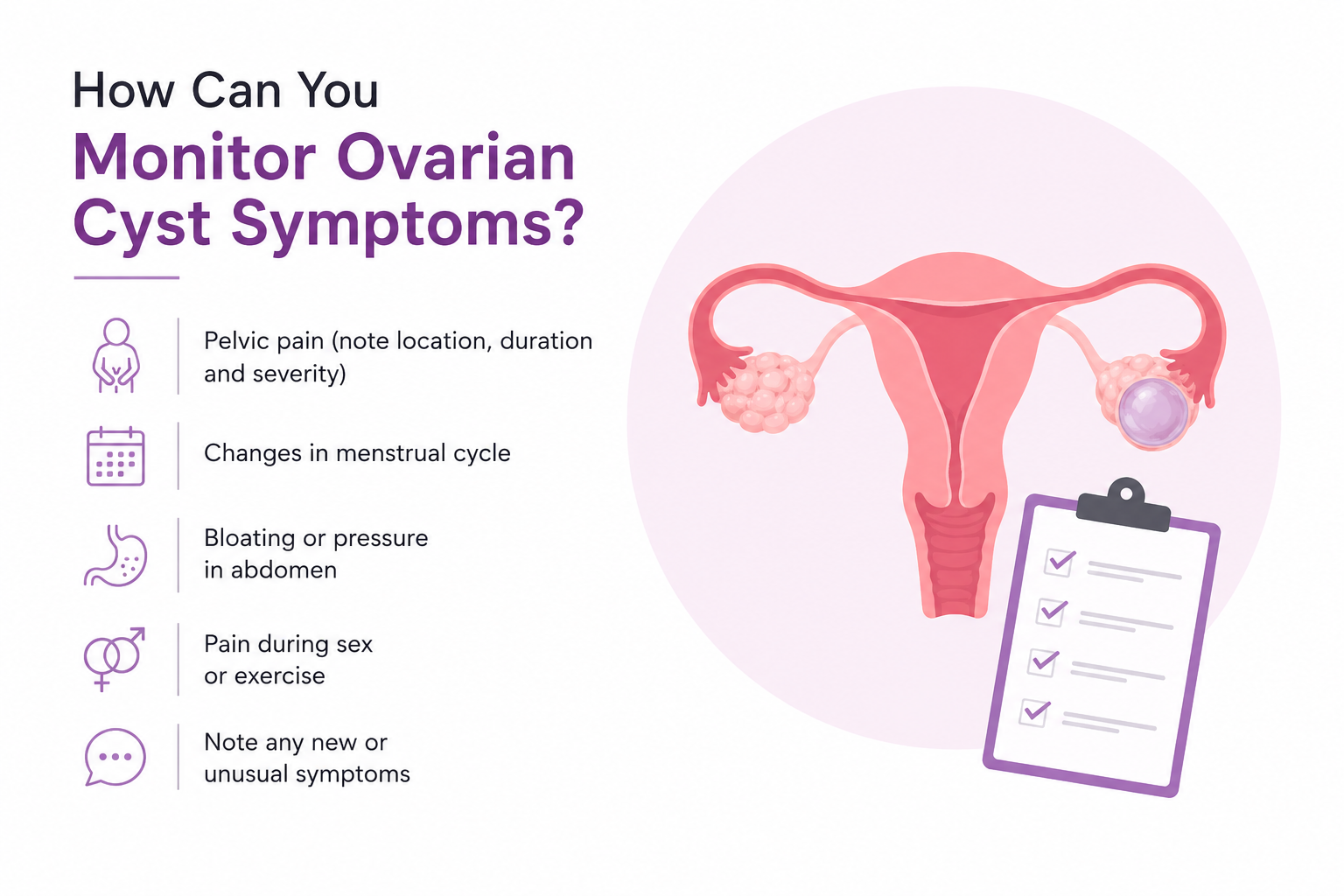
It can be useful to have an idea of what symptoms are caused by an ovarian cyst if you have been diagnosed with it. If you are on a medication that you are given, you can check any improvements, reminiscences or deterioration in symptoms.
A quick note of:
Discuss this with your medical provider at check-up times. It can assist them comprehend what is happening with you, and evaluate if tests or treatment is called for. As recommended by the ultrasound, attend all appointments and contact your doctor if symptoms become worse. If pain develops suddenly and is severe, it is recommended not to take a scheduled appointment, but instead to go to the help room at once, and notify the staff if there are any emergency signs and symptoms that the procedure requires a different center.
We pride ourselves on having some of the best doctors who are suitable for treating our patients with various reproductive problems. This includes ovarian cysts, among other treatments. Being one of the best hospitals in Nepal, our expertise is as follows:

Dr. Noora Pradhan is an Obstetrician & Gynecologist Consultant and also practices Laparoscopy in Gynecology. She has MBBS and MD in Gynecology & Obstetrics degrees and has vast experience in providing special treatment for different gynecological diseases. Laparoscopic gynecologic surgery expertise can be especially useful for women who need surgical examination or treatment of their ovarian cysts. Laparoscopic surgery is a minimally invasive surgical procedure that can be performed in case an ovarian cyst needs to be operated on. The women suffering from persistent pelvic pain, abdominal discomfort or other symptoms associated with an ovarian cyst can consult with a gynecologist for their evaluation and treatment.

Dr. Anupama Suwal is a gynecologist and reproductive medicine specialist at Venus Hospital. She has an MBBS and MD in Obstetrics and Gynecology and additional training in IVF, gynecology laparoscopy and hysteroscopy. Her combined experience in gynecology and reproductive medicine can be helpful for women having gynecological issues affecting their reproductive health. In case of an ovarian cyst, she can examine the condition, determine its possible effect on the reproductive health of a woman and suggest appropriate management depending on patients' symptoms and results of examination. Her expertise in gynecologic laparoscopy can be used in case minimally invasive surgical treatment is needed.
Ovarian cysts may be very common, and many do not causing any symptoms or require treatment. But before that it is important that you know the signs and symptoms of ovarian cyst including any feeling of pain in the pelvis or abdominal pain, bloating, irregular periods as well as the feeling of pain during intercourse. If any of these continue, get worse, or interfere with everyday life, it's important to talk to a health care provider. If pain is sudden and extreme, particularly if accompanied by nausea, vomiting, dizziness or fainting, it requires urgent medical attention.
Venus hospital provides gynecology and obstetrics services to cater to the needs of women and girls with symptoms that may be associated with an ovarian cyst. The hospital has healthcare professionals with experience that can evaluate your symptoms, suggest the necessary tests and provide the guidance you need to take the next steps. To know more and to fix an appointment at the Venus Hospital.
Most ovarian cysts are asymptomatic particularly if they're small. If symptoms do happen they can range from pain in the pelvis, bloating, a feeling of fullness, abnormal periods or pain with intercourse. It's a good idea to go to a doctor if these symptoms persist or get worse.
Yes, a lot of ovarian cysts – particularly functional – resolve naturally over time without treatment. By receiving regular check-ups and/or ultrasound imaging, your doctor can keep an eye on your cyst to ensure it is beginning to shrink. Only starting treatment is necessary if the cyst is painful or symptoms occur, or the cyst does not resolve.
Many ovarian cysts are benign, and cause no major health issues. Rather than a progressive increase in pain, sudden and severe pain, particularly accompanied by nausea, vomiting, dizziness or fainting, should be viewed as a possible complication. Seek medical help right away if you get these signs and symptoms.
Your doctor will ask questions about your medical history and symptoms prior to any examination of your, or anyone's, pelvic area. An ultrasound is performed to evaluate the size, location, and type of cyst. Blood tests or other imaging tests might also be suggested in some cases.
For the majority of patients, ovarian cysts don't interfere with their chance of getting pregnant. But, in some women, certain kinds of cysts, particularly those resulting from endometriosis, may impact fertility. If you are trying to conceive and have any concerns about an ovarian cyst circle your doctor up for advice.