24*7 365 days
24*7 365 days
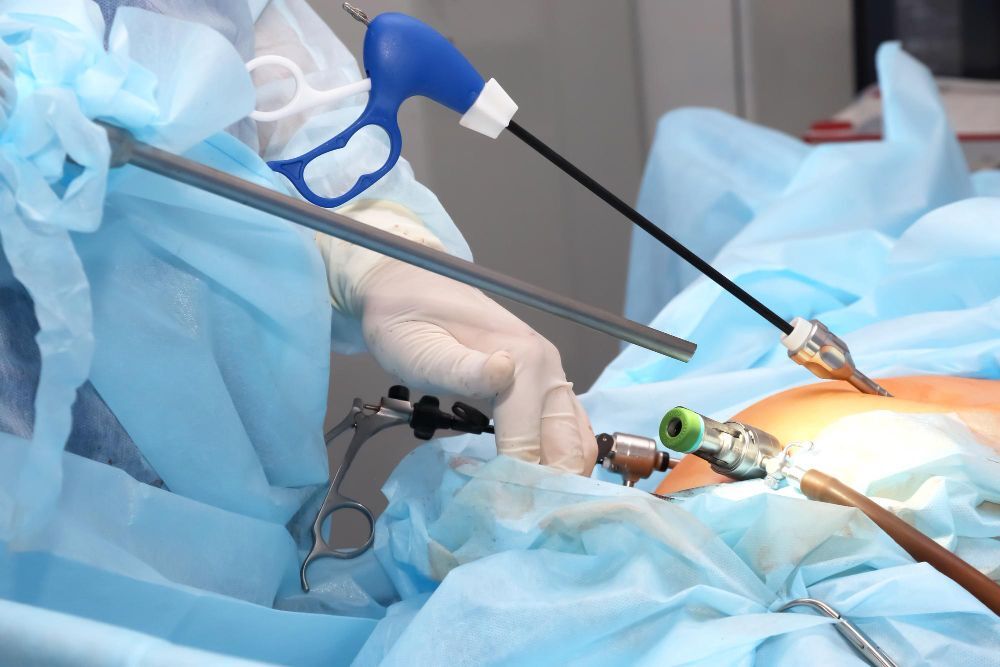
Our world is evolving at a rapid pace in all facets, including medicine. One significant advancement in the medical world is laparoscopic surgery. What is laparoscopic surgery? In simple terms, laparoscopic surgery is any form of surgery that is conducted by experienced surgeons using a device known as a laparoscope. While it cannot be used in every aspect, it does eliminate the need for large incisions where it can be used. Furthermore, it is also a delicate form of surrey. Because of this, should you ever need this form of surgery, you should always choose the best laparoscopic surgeon in Nepal. That said, a common query regarding this is, “Who is the best laparoscopic surgeon in Nepal?”
In this blog, we provide you with a general overview of this surgery along with a brief profile of two of the best laparoscopic surgeons in Nepal.
 A laparoscopy is a minimally invasive surgery. In this form of surgery, your surgeon uses a tool known as a laparoscope, a thin telescope rod with a video camera attached to the end. This tool allows the surgeons to view the inside of your body. With this aid, they then insert other small surgical instruments through a few more small incisions, usually less than an inch, to repair or remove the damaged area. Needless to say, because of the small incision of this surgery, it has a shorter recovery time. However, because it is a highly specialised surgery, it does take longer for experts to be proficient in it.
You should also note that laparoscopic surgery is an umbrella term used for any surgery that involves a laparoscope. Some of the surgeries involved in this umbrella term include:
Besides the ones we included here, there can also be other forms of laparoscopic surgery depending on the specialisation of the doctor.
 After understanding the general overview of what laparoscopic surgery is, let us now discuss some general procedures for laparoscopic surgery in Nepal. While discussing the procedures, we need to consider that the specific process varies depending on the type of surgery. Therefore, we can only provide you with an overview of common procedures. Keeping this in mind, let’s look at common procedures.
In the first step of laparoscopic surgery, the surgeons, along with their team, position you on an operating table with your body slightly tilted. In this position, the head is positioned lower than the feet. They then dose you with general anaesthesia, which numbs the section and relaxes you.
After administering anaesthesia, the experts make a small cut below your belly and your rib cage. They insert a thin tube and fill your stomach with gas next to push the abdominal wall upwards, giving a nice view of the organs.
The experts then retract the gas tube, making a few other incisions to insert the laparoscope and surgical instruments. Then, they are all geared up for the preparation of the procedure.
After inserting the laparoscope, the expert then goes ahead with the surgery. The exact process of surgery is different according to the type of surgery. In any case, after they complete the surgery, the surgeons let the gas out of your abdomen and sew up the incision. This part can last anywhere from half an hour to more than three hours, depending on the complexity.
Following the overview of the procedure for laparoscopic surgery, let’s now discuss some types of personnel who might need to go through this form of surgery. Some of the key types of personnel who might need laparoscopic surgery in Nepal include:
Those who have gallbladder problems and require cholecystectomy
For anyone with the mentioned conditions, the experts prefer laparoscopic surgery due to its minimally invasive nature and shorter recovery time. Laparoscopic surgery is also preferred because it leaves smaller scars when compared to open surgery.
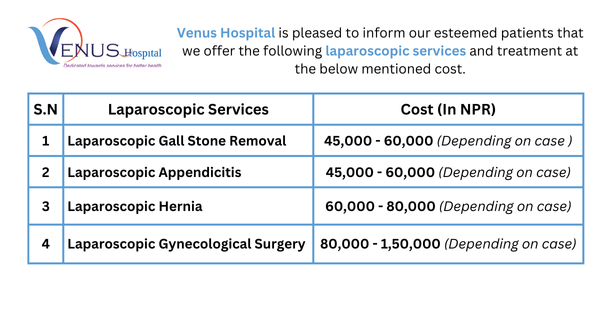
Besides knowing who needs this surgery, you might also be curious regarding its cost. The specific cost of laparoscopic surgery in Nepal depends on the specific nature of the surgery. That said, we can provide you with a general estimation. The cost of laparoscopic surgery may vary from Npr 45,000 to over Npr 1,50,000, according to our estimate of a case. Note that this price range is based on the laparoscopic surgeries at Venus Hospital; it covers standard medical fees and hospital charges.
That said, it can go over the range we provided depending on your requirements. Therefore we advise you to consult your doctor first before making any immediate decision.
 After discussing the overall concept of laparoscopic surgery, let’s discuss the aspect of choosing the best laparoscopic surgeon in Nepal. There are several factors to consider before choosing the best laparoscopic surgeon in Nepal. Some of the major factors that need to be considered include:
First, you have to see the experience and credentials of an ideal laparoscopic surgeon in Nepal. While performing laparoscopic surgery, an experienced surgeon is likely to be better as compared to a less experienced one. Secondly, their educational background and what specialised training they have received form an important part of the inquiry. The better their educational background and specialised training, the better they are likely to be for you.
Another important point is concerning the hospital affiliation of the doctor and the facilities. Ensure that your doctor has been affiliated with a well-reputed hospital that maintains all the facilities and equipment. Doing so ensures that you can get the best service and that the doctor shall not be held back by lack of means.
Besides hospital affiliation, you should also check for the reviews and ratings of the doctor and hospital. Given that people love to rate just everything, taking a quick look at the overall rating of the hospital and looking for reviews regarding the surgeon or surgery can help you make your decision greatly. Additionally, you can also look for reviews regarding the specific surgeon if available. The higher the rating, the better the doctor is likely to be.
Along with the reputation, you should also look at the success rates and complication history of the surgeon. If a laparoscopic surgeon has a high success rate with a low complication history, it proves that they are good and better than others with lower success rates or more complications.
While choosing the best laparoscopic surgeon in Nepal, you should also check if the surgeon offers postoperative care and support. Furthermore, a good laparoscopic surgeon should also provide you with consultations, recovery monitoring, and advice on lifestyle adjustments. Good aftercare can lead to faster recovery and fewer complications.
Last but not least, you should also check if the surgeon specialises in your specific condition. As you may have noticed from our overview, there are many types of laparoscopic surgeries. Therefore, when choosing the best laparoscopic surgeon in Nepal, you should ensure that the surgeon has plenty of experience with your condition.
These are the key factors you should consider when choosing the best laparoscopic surgeon in Nepal. Keeping these in mind, two of the best ones include:

Dr. Rajiv Nakarmi, with 8 years of experience in general surgery and a fellowship in GI minimal-invasive surgery, is recognized as one of the top laparoscopic surgeons in Nepal. He holds an MBBS from Xinxiang Medical University, China, and an MS in General Surgery from Kathmandu University. Dr. Nakarmi is registered with the Nepal Medical Council (NMC No. 8518) and provides expert care in minimally invasive procedures. For consultations, he is available every day from 4 PM to 6 PM.
Laparoscopic surgery is a form of minimally invasive procedure (MIS) where a surgeon makes small cuts to insert a laparoscope along with other forms of surgical tools for conducting surgery. That said, although the general process remains the same, the specific procedure depends on the type of laparoscopic surgery. The type of surgery will also determine the price of the surgery. Considering all these aspects, you will have to choose the best laparoscopic surgeon in Nepal for the best results. You should look at several factors, including his or her credentials, experience, and specialisation regarding your procedure. Two of the best ones in Nepal are Dr. Rajiv Nakarmi and Dr. Shreedhar Arya, affiliated with Venus Hospital.
In this blog, we provide you with an overall gist about laparoscopic surgery along with information on choosing the best laparoscopic surgeon in Nepal. We hope you found this helpful. If you seek further insights into the various health aspects, do check out some of our other blogs. And if you want the best laparoscopic surgery in Nepal, look no further than Venus Hospital. Thank you for reading till the end.
Learn more:- Complete detail on Test tube baby and ivf in Nepal
The specific cost of laparoscopic surgery in Nepal depends on the type of surgery and the medications involved. However, at Venus Hospital, the laparoscopic surgery cost ranges from Npr 45,000 to Npr 1,50,000.
No laparoscopy is not always successful. The success rates can depend on various factors such as type of procedure, patient health, and surgeon experience. Should laparoscopic surgery fail, it can often transform into open surgery.
Laparoscopic surgery is typically not painful at all, as you shall be provided with general anaesthesia to numb the pain. However, if your body is resistant to anaesthesia or you have a special physique, the surgery can be moderately painful.
There is no “best” laparoscopic surgeon for all types of surgeries as even the best ones are specialised only in their own niche. However, if we had to pick, two of the best ones include Dr. Rajiv Nakarmi and Dr. Shredhar Aryal.
Initial recovery from laparoscopy lasts for around one to two weeks, and moderate recovery lasts for around four weeks, while full recovery can take up to six weeks. That said, the recovery can be affected by many factors, including type of procedure, health, and postoperative care.
Following the overview of laparoscopic surgery, here are key groups who may need this procedure in Nepal:
Similar to any surgical procedure, laparoscopy too has its own set of side effects. Although these side effects are uncommon, they do exist. Some of the key side effects of laparoscopic surgery include:
The five key benefits of laparoscopy surgery include: