24*7 365 days
24*7 365 days

In Vitro Fertilisation, or IVF for short, is a form of Assisted Reproductive Technology (ART) that aims to enhance the chances of successful pregnancy. In this procedure, the egg is extracted from the uterus, fertilised in the laboratory, and then implanted back into the uterus. For those couples who cannot become parents naturally, it is one of the best methods to fulfil their dream of parenthood. However, IVF in Nepal is not just used by couples with infertility; it is also used by any couples who want to boost their chances of becoming a parent. Knowing this, you may want to ask, “What is the success rate of IVF In Nepal?”
In this blog, we discuss IVF success rates in Nepal along with the factors affecting the success rates. Additionally, we discuss some tips to improve the success rate of IVF in Nepal. So, with this in mind, let’s get started!
 Although IVF has a high success rate when compared to other forms of infertility treatments, it does not guarantee a 100% success rate. Furthermore, the success rate of IVF can vary based on numerous specific factors. Two of the key factors affecting the IVF success rate are the age and health of the partner. Therefore, it is relatively hard to give you an exact number of success rates. However, we can provide a rough estimation based on the age, given that both partners have average reproductive health. The IVF success rates of varying ages in these circumstances are as follows:
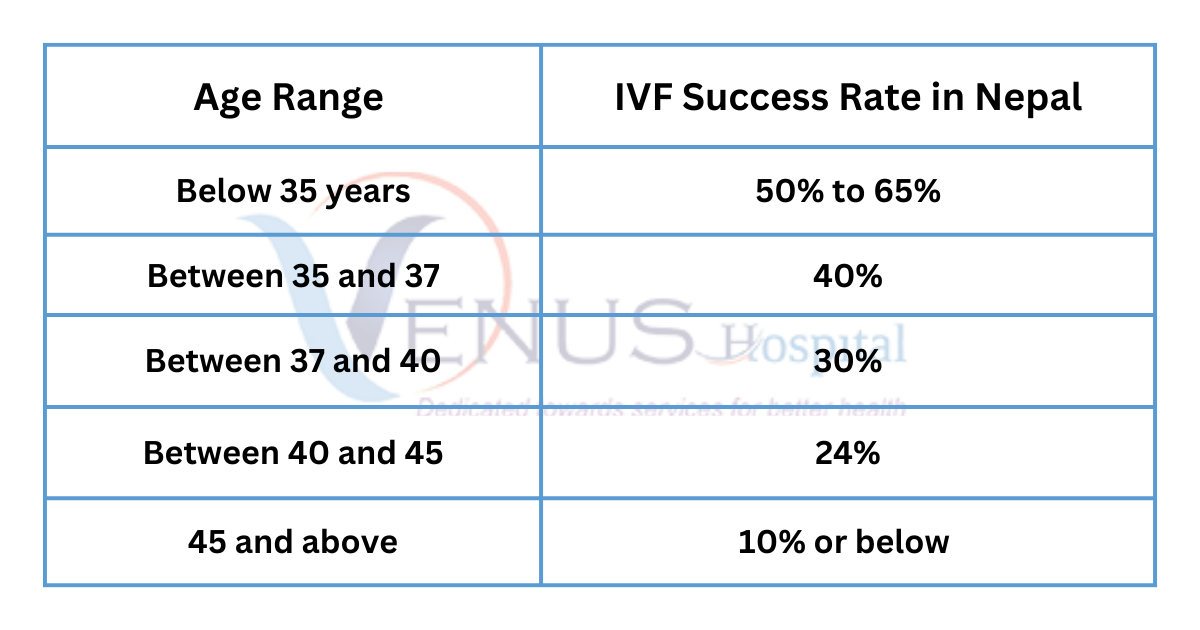 As you may see from this table, the higher the partner’s age, the lower the success rate of IVF. As mentioned previously, age is not the only factor contributing to IVF’s success rate.
Many factors affect the success rate of IVF. Among many such factors, age and reproductive health are among the most well-known. However, the factors affecting the success rate of IVF are not just limited to age and health. Some other key factors affecting the overall success rate of IVF include:
Besides age, the quality of the egg and sperm is another key factor affecting the success rate of IVF. The higher the quality of eggs and sperm, the higher the success rate of IVF. That said, the quality of eggs and sperm is directly associated with the parent’s age. Parents under the age of 35 have better-quality eggs and sperm. However, age is not the sole factor influencing the quality of eggs and sperm. Factors such as history of previous pregnancy also affect the egg quality.
 Previous pregnancy history is a key factor in determining egg and sperm quality. If you have a previous history of successful pregnancy, it indicates that they have higher quality egg and sperm. Likewise, it also increases the success rate of IVF. However, if you have unsuccessful pregnancies in the past, it can result in a lower IVF success rate.
Some fertility issues are more difficult to treat than others. Therefore, if you have fertility issues that are harder to treat, such as ovulation disorders, you may have a lower chance of success in this form of fertility treatment. At the same time, if your fertility issue is a minor one, such as a blocked fallopian tube, the overall success rate of IVF treatment is significantly higher. Likewise, the success rate of IVF is also relatively high if the cause of infertility is unknown. Do note that the success rate of the first time can and does highly depend on the type of fertility issues you may have.
Egg and embryo quality in this form of fertility treatment can be influenced by the ovarian stimulation technique used, which is shaped by genetic and extrinsic factors, including hormonal changes during treatment. The Controlled Ovarian Stimulation Protocol guides the use and timing of fertility medications to develop mature eggs for successful pregnancy. Doctors customise stimulation protocols to your needs through research and comparing different techniques. Proper timing of ovulation is crucial to avoid immature or overmature eggs, especially in patients with conditions like PCOS. Common protocols include the Long GNRHA, which uses Lupron and Gonadotropin to create an LH-free environment, and the Microflare, which combines GnRH agonists and gonadotropins to boost ovarian response but may affect egg quality. The GnRH Agonist Conversion Protocol with Oestrogen Priming involves GnRH antagonists for women with high LH or ovarian hyperplasia, often seen in women over 40 or with elevated FSH levels.
Along with the COH protocol, the success rate of IVF is also influenced by embryo transfer. The timing and quality of embryos transferred directly. If the embryo’s quality is high and transferred at the right time, the success rate of IVF increases. On the flip side, if the quality of the embryo is low or if it is transferred at the wrong time, the success rate of IVF decreases sharply. Therefore, the timing and quality of the embryo are highly important factors in a successful IVF process.
Besides embryo transfer, your lifestyle factor also affects IVF success rates. Specific lifestyle choices such as excessive smoking, alcohol consumption rate, and excessive stress can lead to low IVF success rates. On the other hand, if you have good lifestyle factors such as good overall health, lower stress, and healthy weight, it can, in turn, increase the success rate of IVF. While these factors do not directly affect IVF success rate, they contribute to healthier eggs and sperm, ultimately leading to a higher success rate.
These are some of the key factors affecting IVF’s success rate. Besides the ones we mentioned here, several other factors can affect you depending on your circumstances. Regardless, we hope you understood the general gist of the key ones.
 So, by now, you should be aware of the average IVF success rates and the factors affecting the success rates. Now, let’s talk about some tips that you can use to enhance it. Some of the key tips that we have for you include:
One of Nepal’s best ways to increase success rates is to consume healthy foods. Eating healthy foods helps to nurture eggs and the uterus, accelerate ovulation, nourish the womb, and slow down egg degeneration. It also aids in the health of eggs and the maintenance of healthy hormones. Some of the ideal foods to consume include:
A healthy weight is essential for a successful IVF cycle. If you are underweight or overweight, it can drastically reduce your success rates. The best success rate occurs when your BMI is within the acceptable range. For Nepali, the ideal BMI is between 18.5 to 24.99 kg/m2. You can achieve this BMI range through diet and regular exercise. You can go to the gym if you have not undergone the IVF procedure. However, if you have already undergone the IVF procedure, you can maintain a healthy weight by walking or doing non-strenuous yoga poses. The key point is to reduce strenuous activities while maintaining an active lifestyle after the IVF process to maintain a healthy weight and increase the chances of IVF success.
You should limit caffeine consumption to increase IVF success rates alongside maintaining weight. Although caffeinated drinks such as coffee and cola have become a regular part of our everyday lives, they are not all that healthy. Overconsumption of caffeinated drinks can cause hormonal imbalance, reduce blood flow to the uterus, and negatively affect the egg quality. Additionally, some studies also suggest that increased consumption of caffeine can have a negative impact on sperm quality and increase the risk of miscarriage. Doctors recommend limiting caffeine consumption to 1-2 cups per day.
Similar to the effect of excessive caffeine consumption, smoking and alcohol consumption can reduce egg and sperm quality. Furthermore, they can also cause hormonal imbalance. Smoking also reduces uterine receptivity, while alcohol consumption can impair the endometrial lining’s ability to support embryo implantation. All of these negatively impact the success rate of IVF. While it is a good idea to avoid smoking and alcohol consumption in general, avoiding these substances is especially essential before, during, and after the IVF procedure.
Getting adequate sleep is important for health, including reproductive health. It can significantly improve the success rates for IVF. This is because sleep maintains the balance and production of reproductive hormones such as oestrogen and progesterone. It also reduces stress, boosts mental health, and strengthens the immune system. All of these contribute to enhanced IVF success rates.
These are some of the key tips you can use to enhance the IVF success rates in Nepal. Besides the ones we mentioned here, your reproduction specialists could suggest additional tips. Consult with one of the best IVF specialists in Nepal: Dr. Anupama Suwal.

Dr. Devi Gurung is highly regarded and has more than 35 years of expertise in general surgery, gynecology, and obstetrics. She focuses on both areas (internal medicine and women’s health) at the same time with her dual degrees. Furthermore, her dual specialization, compassionate care, and precise diagnostics helped her to earn more reputation. She is an expert in areas such as Internal Medicine & Chronic Disease Management, Women’s Health & Preventive Care, High-Risk Pregnancy & Infertility Treatment, and Minor & Major Gynecological Procedures. She is a trustworthy doctor at Venus Hospital, which provides a patient-centered approach.
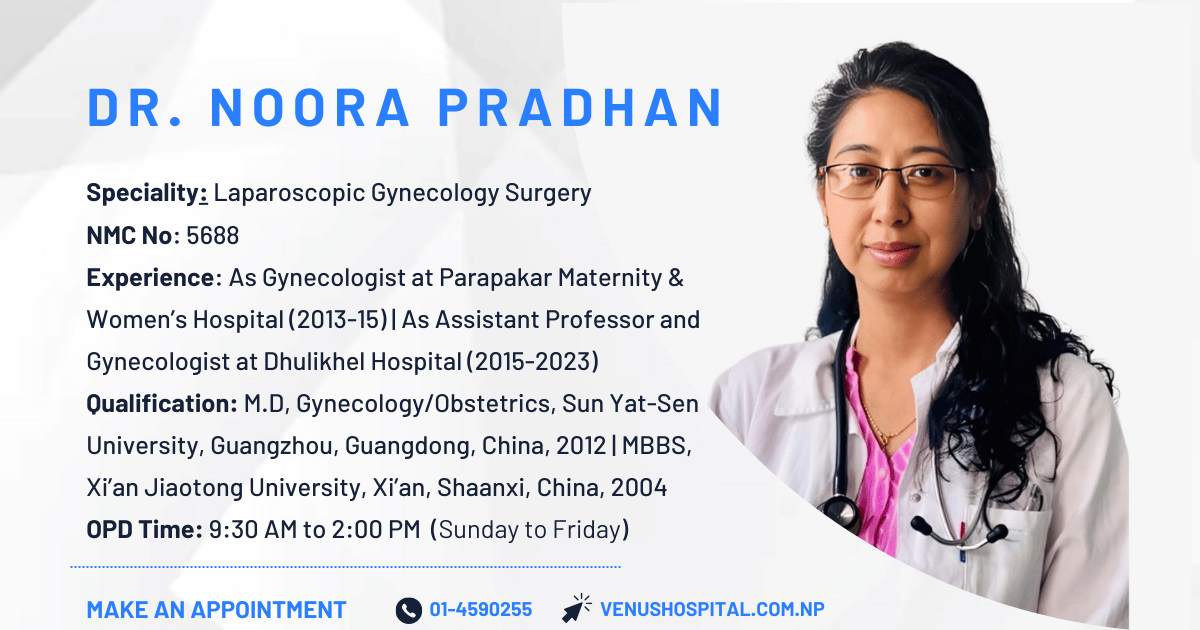
Dr. Noora Pradhan is a proficient and experienced specialist in Gynecology and Obstetrics. She holds an MD in Gynecology and Obstetrics from Sun Yat-Sen University, Guangdong, China (2012), and completed her MBBS from Xi’an Jiaotong University, China (2004). With her degree and a decade of experience as a Gynecologist and Obstetrician, she is now one of the best doctors with expert skills in women’s health, pregnancy care, and reproductive medicine.
During her 10 years of experience, she worked as a Gynecologist at Paropakar Maternity & Women’s Hospital from 2013 to 2015. To develop her skills more, she further worked as an assistant Professor and Gynecologist at Dhulikhel Hospital from 2015 to 2023. Now, she is working at Venus Hospital, and her work includes comprehensive obstetric care, high-risk pregnancy management, minimally invasive gynaecological procedures and preventive women’s health. She tries to contribute her education to womens for their health and safety.

Dr. Anupama Suwal is one of those medical professionals who have a very high success rate in her field of specializations, which involve managing women’s diseases, managing pregnancies, and helping patients in fertility and reproductive health.
She started by earning her MBBS degree from Kathmandu University, Dhulikhel, in 2005. Additionally, she obtained her MD degree in Obstetrics and Gynecology from the same university. Dr. Suwal also completed her advanced fellowship training in hysteroscopy, gynecological laparoscopy, and IVF from which she is able to adapt to any complex situation, such as complex fertility issues and minimally invasive gynaecological procedures. Her qualifications, background, and empathetic demeanor have established her as a reliable figure in fertility care.
In Vitro, Fertilisation IVF is a form of assisted reproduction technology that aims to enhance the chance of successful pregnancy. In this process, the egg is taken outside the uterus and is fertilised in the laboratory before being implanted back into the uterus. This treatment has a high success rate. While the exact success rate varies depending on many factors, it ranges between 10% to 65%. Some of the key factors that contribute to IVF success rate include age, fertility health, quality of egg and sperm, history of pregnancy and more. The good news is that you can implement some tips to enhance the success rate of this treatment. These tips include maintaining a healthy weight, consuming healthy food, and reducing caffeine, alcohol, and smoking.
In this blog, we discussed the IVF success rate in Nepal, factors contributing to the success rate, and tips for improving success rates. We hope you found this helpful. If you’re looking for more information about IVF and other health topics, be sure to read our other blogs.
Moreover, if you want the best IVF service in Nepal from the best fertility centre, look no further than Venus Hospital, the leading hospital in Nepal. Thank you for reading till the end.
While the specific success rate for IVF depends on many factors. However, the IVF success rate based on the age are:
Although IVF does have a relatively high success rate, it is not 100%. On average, the IVF success rate in Nepal is between 10% and 65%.
IVF is most successful below the age of 35. That said, it still has a decent chance of success under 40. After this age, the success rate drastically decreases.
In general, the late age for IVF is 43, but the chances of IVF success are under 10% at this age. Therefore, it is not advised to undergo IVF at this age with your eggs.
Yes, IVF pregnancy is generally safe. Although there are chances of some complications, it is not higher than that of regular pregnancy.
The age directly affects the IVF success rate. As the age increases, the success rate of IVF decreases. For instance, the success rate of IVF for those under 35 is 5o% to 65%, while the success rate for those over 40 is 10% or below.
Some of the other factors affecting IVF success rates besides age include the following:
While mild caffeine consumption is acceptable, excessive caffeine consumption can result in hormonal imbalance, reduced blood flow to the uterus, and can negatively impact egg quality.
The IVF cost in Nepal is between 2,00,000 and 2,50,000 on average.