24*7 365 days
24*7 365 days
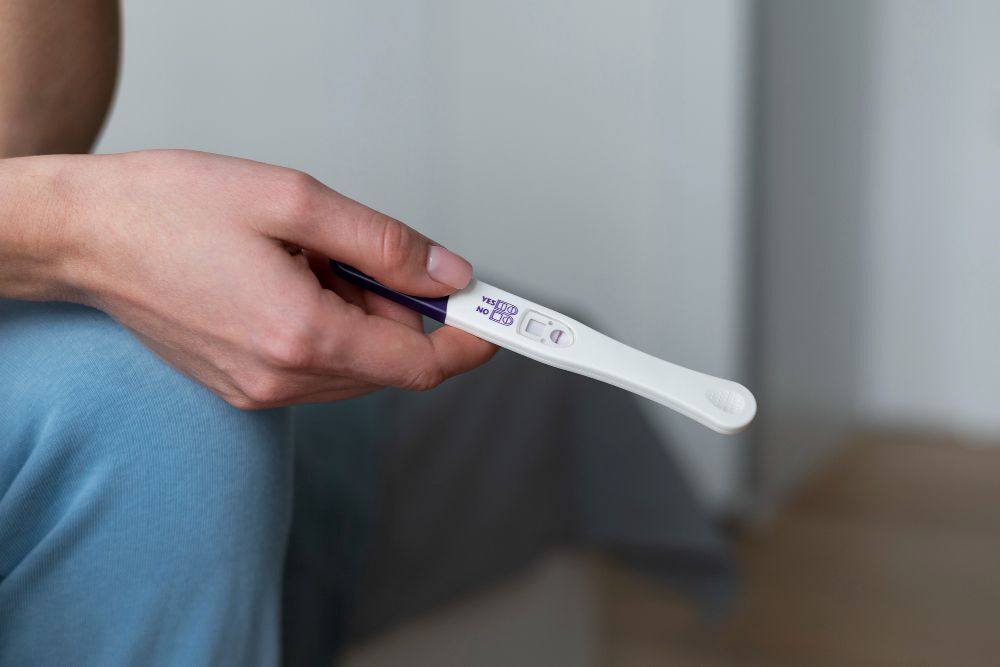
Let’s be honest here: despite many advances in medical technology and treatments, fertility treatments such as IVF are still a relatively new field of medicine. And although the success rate is fairly high in these treatments, there is still a risk of failure. This stress from the risk of failure is especially high during the two week wait period after the embryo transfer. During this period, you tend to gear towards looking for failed IVF procedures and often get stressed about the results. But what is a two week wait (2WW) period, and what are the signs of failed IVF in 2WW period? Well, worry not, for this is exactly what we shall talk about in this blog.
We cover various aspects of the two week wait period of IVF, such as what the two week wait period in IVF is, some common causes of failed IVF, and the core of our talk – signs of failed IVF in 2WW period. So, keeping this in mind, let’s get started!
 In simplest terms, the two week wait period or 2WW for short, is the general amount of time you need to wait to know whether the embryo has successfully implanted into your uterus wall. Now, note that the specific duration can depend on your circumstances. It is often determined by your reproductive, physical, and mental health, along with the medications you are currently taking. However, this general estimation does work for most circumstances.
During this time, the egg first implants itself into your uterus wall. Then, it burrows itself into the uterus lining, and within a few days, the implantation completes. Once the embryo implants itself, it starts to develop a placenta while prompting your body to produce Human Chorionic Gonadotropin (hCG) hormone. This hormone doubles roughly every two days, and it rises to the level that it can be detected in a pregnancy test within a few days.
As mentioned prior, this entire process takes roughly two weeks, give or take a few days. You can look for the signs of failed IVF in 2WW period. But what are the signs? Before we discuss the signs, you first need to know what can cause IVF to fail.
IVF, without a doubt, has a high success rate and is one of the most recommended infertility treatments out there. However, despite its high success rate, it does not have a 100% success rate, and there are many reasons behind its failure. Some of the key causes that you should be aware of include the following.
One of the most obvious causes of the failed IVF process is the low quality of eggs. While low-quality eggs should not be an issue if you are younger than 35, it is a severe issue if you cross this age threshold. This is because the older you get, the more your egg quality degrades. As you can expect, the lower quality eggs have low chances of fertilization, resulting in failed IVF. Along with this, low-quality eggs may also have chromosomal defects, which further lower the overall chances of a successful IVF treatment. There is hope even if you have low-quality eggs, as you can always use donor eggs for a successful IVF treatment.
It’s not just the eggs that can cause an IVF treatment to fail; the issue might even be caused by poor-quality sperm. The IVF failure caused by low-quality eggs vs. low-quality sperm is around 50/50, so before you decide to use donor eggs, you should also check the quality of sperm. Now, unlike females who are born with a fixed amount of eggs, they practically create sperm all their life. But the quality does decrease with age. Furthermore, the quality of sperm can also be reduced by various other factors. Regardless, if a sperm has low motility and an abnormal shape, it can cause the IVF process to fail. As you can guess, if the issue is with sperm – you can always use a donor sperm.
Sometimes, the issue is not with the quality of eggs and sperm but with how the ovary responds to the medications used during IVF and the number of good-quality eggs that the ovaries produce. There can be times when the ovaries may not respond well and only produce a few eggs. This lower number of eggs automatically means lower chances of a successful IVF procedure.
On the other hand, sometimes the ovaries may also overreact to fertility medications, which can result in OHSS. Should you face this condition, your ovaries enlarge and can cause you pain. The good news here is that you can solve this issue relatively easily with a bit of medication. However, the end result is still a failure of the IVF procedure.
Last but not least, the final cause of IVF failure we are going to discuss is age. Although we have put age last on our list, it is undoubtedly one of the key reasons why IVF fails. As you may have seen from what we mentioned in our previous entries, age can lead to degradation in egg and sperm quality, ultimately leading to IVF failure. However, the effect of age is not just limited to the degradation of eggs and sperm. They can also lead to your body being oversensitive or under-sensitive to certain medications, which can further lead to IVF failure. On top of all this, you cannot really prevent your body from aging either. While you can keep your body relatively healthy for your age, the effect of aging will still be present. Therefore, if you want to do IVF, the best option is to do it before you reach the age of 35, as you have the highest chances of IVF success before this age.
These are just some of the key reasons behind IVF failure, and the list is not exhaustive. Regardless, we hope you got the basic gist behind the core reasons for IVF failure.
Also Read: IVF Success Rates in Nepal: Conceive Healthy Baby With IVF
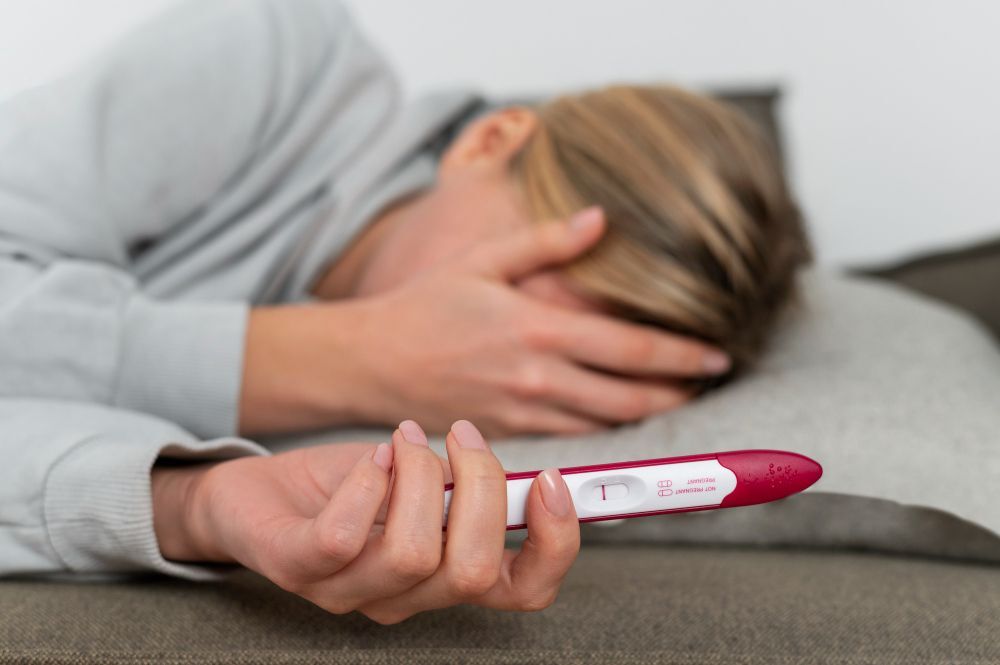 And with this, we finally reach the core topic of our blog- what are the signs of failed IVF in 2WW period? Well, there are many signs you should look out for, and some of these signs might not even be noticeable at first glance. Additionally, you may even assign some of these signs to other aspects of health at times. However, if you are in a two week wait period, you should note down any unwanted or unexpected changes you have in your body and consider them carefully. Some of the key signs of failed IVF in 2WW period include:
Okay, so maybe having no symptoms of a failed IVF treatment is not a definitive sign of a failed IVF. But this also doesn’t necessarily mean that your IVF has succeeded. Some women have completely normal pregnancies even if they do not show any signs of pregnancy during the two week wait period. If you have no obvious signs of pregnancy during this two week wait period, you should consider consulting your reproduction expert. Regardless of whether your IVF succeeds or not, if you do not have any signs of success or failure, then something is indeed wrong with your body. So, although having absolutely no symptoms of pregnancy does not necessarily mean that your IVF has failed, it also does not mean that your IVF has succeeded, either.
This is another one of the cases where if you show these symptoms, it doesn’t necessarily mean either success or failure. So the chances of spotting or vaginal bleeding being symptoms of IVF failure is somewhat of a 50/50 chance. This is because roughly a quarter of pregnancies are, in fact, accompanied by spotting and vaginal bleeding. But since this symptom is on this list, you should already be aware that there is a fairly decent chance that it is also one of the signs of IVF failure in 2WW period.
If the spotting or vaginal bleeding is indeed a sign of failed IVF during the two week wait period, then it can signify implantation failure or the onset of menstruation. While the onset of menstruation and failed implantation may seem unrelated, both of these circumstances imply that your IVF process has failed.
The next entry on our list is cramping. Cramping is similar to our previous entry, as it does not necessarily mean that the IVF process has failed. However, if menstrual cramps occur within the two week wait period, then there is a good chance that it is indeed a sign of IVF failure. Cramps similar to menstrual cramps can signify that the embryo failed to implant successfully after the IVF procedure.
That said, you do have to note that mild cramping is completely normal. Mild cramping in the uterus often indicates that the uterus is adjusting to its current state after the egg is transferred. But, if the cramping is constant and severe, then you better go to the doctor as not only is it painful but also signifies a failed implantation and, thereby, a failed IVF. This uncomfortable and painful sign is often one of the most common signs of a failed IVF and the first one to show should it occur.
Besides just looking at the symptoms, do you want to know what one of the most obvious signs of failed IVF in 2WW period? It’s a negative pregnancy test. In fact, the signs cannot be clearer than this. If you take a pregnancy test during or after your period is due (if it falls under the 2WW period) or at any point of time during this phase, and it shows negative, then you can be sure that the procedure has failed. When this test is combined with other signs that you might probably be experiencing, such as no signs of pregnancy and spotting, then you can be more sure of the IVF failure.
You have to note that pregnancy tests measure the HCG hormones, which are essentially key hormones produced during pregnancy. If you do not produce enough hormones, the test shows negative results. Although there are chances of false negatives, modern pregnancy tests are accurate enough for the results to be accurate, typically above 95%.
Pregnancy test is not the only aspect of IVF which is associated with hormones. If you are afraid of the IVF process failing, you can also take regular blood tests during the two week wait period to check it periodically. If, during the test, you tend to find out that you have low hormones such as HCG, it can signify that your IVF treatment process has failed. When compared to pregnancy kits, which already have a high level of accuracy, blood tests are even more accurate and measure more than just one type of hormone.
Regardless, the key aspect here is that if you have lower levels of hormones than those are required to make the IVF process successful, it is one of the sure-shot signs of failed IVF in 2WW period.
Consulting the best fertility expert is very important if you are experiencing failure in IVF cycles or considering fertility preservation procedures like egg freezing. Here are some of the best gynecologists and fertility doctors in Nepal who provide personalized and advanced fertility treatments:

Dr Noora Pradhan’s background in laparoscopic gynecology and obstetrics makes her one of the top choices for patients undergoing IVF procedures. She offers a careful examination of patient’s health situations from the initial consultation to the monitoring of potential signs of failed IVF during the two-week wait. Her ability to utilize egg-freezing technology and fertility treatments places each patient in the experience of modern, effective care tailored to each patient’s specifications.

Dr. Anupama Gurung (Suwal) is one of Nepal’s leading IVF and reproductive healthcare experts. With advanced training in advanced fertility techniques, she navigates patients through the delicate IVF process, especially the two-week wait. She is experienced in IVF cycles and fertility preservation which enables her patients to identify signs of failed implantation early enough while offering evidence-based treatments to maximize outcomes.
IVF is one of the most recommended and successful procedures in the world of infertility. However, as successful as it may be, there is also a small chance for this process to fail. While the worry of a failed IVF process is always present, it is especially so during the two week wait period. But, the question here is how can you know that your IVF has failed? What are signs of failed IVF in 2WW period – what are IVF pregnancy failure symptoms during 2WW?
In this blog, we provide you with some of the key 2WW symptoms of IVF failure, along with some causes of IVF failure. We hope you found this helpful. If you seek further insights into the various aspects of IVF, do check out some of our other blogs. And if you want the best IVF service in Nepal, look no further than Venus Hospital. Thank you for reading till the end.
Related Blogs:
The most common indication of a failed IVF implantation is the onset of menstruation, which typically means the embryo did not implant successfully. However, some people may experience spotting or cramping, which does not always mean failure, as these can occur in early pregnancy as well.
Yes, it’s common for some people to experience no symptoms during the two week wait, even if implantation has occurred. IVF symptoms vary widely, and the absence of symptoms does not necessarily mean the cycle has failed.
After a failed IVF cycle, hormonal levels will gradually return to their natural state. The uterine lining sheds, leading to menstruation, and any physical symptoms from IVF medications, such as bloating or breast tenderness, should subside in a few days.
Cramping can be caused by the embryo attempting to implant or by hormone changes from IVF medications. It is not a reliable sign of IVF failure on its own, as many people experience cramping during successful IVF cycles as well.
If an IVF cycle fails, the period typically starts around 10–14 days after the embryo transfer, similar to the usual timing of a menstrual cycle. However, some women may experience a delay or lighter bleeding than usual due to hormonal fluctuations from the medications used in the IVF process.
IVF can fail at any stage: during egg retrieval, fertilization, embryo development, or implantation. Implantation, which lies during the two week wait period, is one of the most common stages where failure occurs, as it depends on numerous biological factors.
If the embryo fails to implant in the uterine lining, it will not develop further. The body will naturally absorb or shed the embryo along with the menstrual lining if implantation does not occur.